
 1 hour ago
3
1 hour ago
3

.jpeg)
.png)
Press play to listen to this article
Voice
Investment into vertically integrated African agribusinesses rose from $12.1 million in 2019 to $82.4 million in 2022, according to the figures underlying this guide, signaling growing confidence in integrated agricultural businesses.
This growth matters because agricultural investment in Africa is no longer limited to buying farmland or financing seasonal production. Investors increasingly examine businesses connecting production, inputs, processing, logistics, technology, and markets.
For diaspora investors, institutional funds, family offices, and agribusiness executives, the central question is not simply where land appears affordable. Investors must determine whether businesses can manage production risk, create market value, and scale responsibly.
Vertically integrated models can provide that connection because they participate across several stages of the agricultural value chain. They may coordinate farmers, provide inputs, aggregate harvests, process products, and reach customers through organized distribution.
This guide examines how to evaluate such opportunities, choose suitable investment structures, conduct practical due diligence, understand agricultural risks, monitor performance, and plan exits while keeping local market realities at the center of decision-making.
African Agricultural Investment Opportunities: A Practical Guide for Investors

Vertically integrated agribusinesses appeal to investors because they connect several revenue-generating activities instead of depending on a single point in the agricultural value chain. This structure can create stronger coordination and more diversified earnings.
🌿 Go Organic on Your Farm: Instead of harmful chemical pesticides and fertilisers, try our organic farming products — including neem oil spray, bio-pesticides, natural plant treatments, organic seeds and seedlings, suckers, and many more organic products that are safe for your health, your family, your soil and your harvest. Shop Now →
Evidence highlighted in the source article points to Acumen’s Resilient Agriculture Fund portfolio companies, including Farmerline, Victory Farms, and FarmWorks, as examples where investment supports businesses working closely with smallholder farmers.
An integrated company may improve farmer productivity by supplying quality inputs, technical support, extension services, aggregation, market access, or processing. The business can therefore capture commercial value while helping participating farmers strengthen production outcomes.
Integration can also reduce coordination problems between farmers and buyers. When one business organizes production schedules, quality standards, collection systems, and sales channels, the movement from farm output toward customers becomes easier to manage.
Investors should still avoid assuming that integration automatically produces better returns. Each additional business activity creates capital requirements, operational complexity, staffing needs, and new risks that must be understood before investment decisions are made.
🔧 Free Farm Tool Available: Use our free Agric4Profits Farm Tools to calculate your farm profits, formulate feeds, identify pests and diseases on both your crops and animal farms, plan your planting and harvesting season, including many more farm tasks to get free expert advice and recommendations — completely free, no registration required. Access Free Tools →
The strongest opportunities usually have a clear reason for integrating activities. A processing business may need reliable farm supply, while an input company may benefit from a dependable farmer network and predictable product demand.
Integration becomes especially valuable when market failures exist between production and consumption. Weak storage, inconsistent quality, unreliable aggregation, or limited processing capacity can create openings for businesses that coordinate those missing functions effectively.
Investors should therefore study where the business creates measurable value, rather than being impressed by the number of activities it controls. Every integrated stage should improve margins, reliability, quality, market access, or resilience.
Ultimately, the attraction of vertically integrated agriculture comes from connected economics. Investors can participate in production and downstream value creation while building relationships with farmers, processors, distributors, and customers through one coordinated commercial platform.

Start with a clearly written investment thesis that explains the country, agricultural subsector, customer, value chain position, expected return, holding period, and major risks. Without this framework, opportunities can appear attractive for inconsistent reasons.
💬 Have a Farming Question? Join thousands of farmers across Africa on the Agric4Profits Community — ask questions, share experiences and connect with agricultural experts. It is completely free. Ask Your Question Now →
Decide whether your strategy favors production, processing, input supply, logistics, technology, or a vertically integrated combination. Each model has different working-capital requirements, operating capabilities, regulatory considerations, and exposure to market volatility.
Assess your own risk appetite before reviewing individual businesses. An investor seeking early-stage growth may tolerate operational uncertainty, while a capital provider seeking stable cash generation may prefer established agribusinesses with proven revenue and management.
Study the target market before studying the project itself. Understand consumer demand, commodity prices, import competition, infrastructure, transport conditions, local production patterns, and the reliability of available suppliers before forecasting commercial performance.
Local expertise should be part of the evaluation process from the beginning. Experienced agricultural professionals, legal advisers, accountants, engineers, and market specialists can identify practical problems that remote investors often overlook.
Build an initial information request covering ownership, land rights, production records, financial statements, customer contracts, supplier relationships, licenses, equipment, staff, debt, insurance, and previous investment. Missing documentation should be investigated immediately.
Separate facts from assumptions in your investment model. Record verified information, management estimates, external benchmarks, and your own projections distinctly so that optimistic assumptions cannot quietly become treated as established evidence.
Review the intended exit before committing capital. Consider whether future liquidity could come from business sale, investor buyout, strategic acquisition, refinancing, asset disposal, reinvestment, or continued cash distributions under the chosen investment structure.
Finally, compare the opportunity with alternatives rather than evaluating it in isolation. Comparing countries, subsectors, business models, and risk levels helps investors identify whether expected returns genuinely compensate for the risks involved.
Read Also: A Guide to Effective Finance and Marketing in Agriculture
📖 Want to Go Deeper on This Topic?
Our expert agricultural ebooks cover poultry, fish farming, different crops production, snail farming, organic farming, mushrooms, sheep, cattle, flowers, pig farming, goat farming, agribusiness, etc. in practical step-by-step detail — written by agricultural professionals for African farmers.
Understanding the Investor Landscape

Africa’s agricultural investment landscape includes specialized funds, development-finance institutions, venture investors, private-equity firms, family offices, strategic companies, and structured agricultural programs. Their mandates differ significantly in geography, stage, ticket size, and return expectations.
The Acumen Resilient Agriculture Fund, highlighted in the source article, focuses on early-stage agribusinesses supporting smallholder farmer resilience. Such a mandate naturally differs from investors seeking mature companies with established revenues and expansion opportunities.
The Fund for Agricultural SMEs in Africa provides catalytic capital to agricultural small and medium-sized enterprises. Investors should confirm whether a partner offers growth capital, blended finance, debt, equity, or technical assistance.
SilverStreet Capital is presented as a major agricultural investment manager with a sustainability focus. This illustrates how agricultural capital providers may combine commercial objectives with environmental or social considerations when assessing opportunities.
Regional specialization also matters. Terrain focuses on primary agriculture, agri-processing, and agritech within Southern Africa, while 4Di Capital represents an early-stage technology-oriented approach within South Africa’s growing agritech investment ecosystem.
These differences affect how an opportunity should be presented. A startup requiring product development capital needs a different investment narrative from an established processing business seeking expansion funding for equipment and distribution.
Investors should also examine geographic concentration. A fund operating mainly in one region may possess stronger local knowledge but greater regional exposure, while a diversified fund may spread risk but have less market-specific operating depth.
Before approaching any investor, study its published mandate, previous investments, preferred stage, sector focus, geographic scope, and typical transaction structure. This prevents wasted effort and helps both parties evaluate the agricultural investment opportunity more efficiently.
Strong matching improves the quality of capital relationships. When an investor’s objectives, capabilities, timetable, and risk expectations align with the agribusiness opportunity, funding discussions can progress toward structure, governance, milestones, and measurable performance requirements.
Priority Investment Sub-Sectors
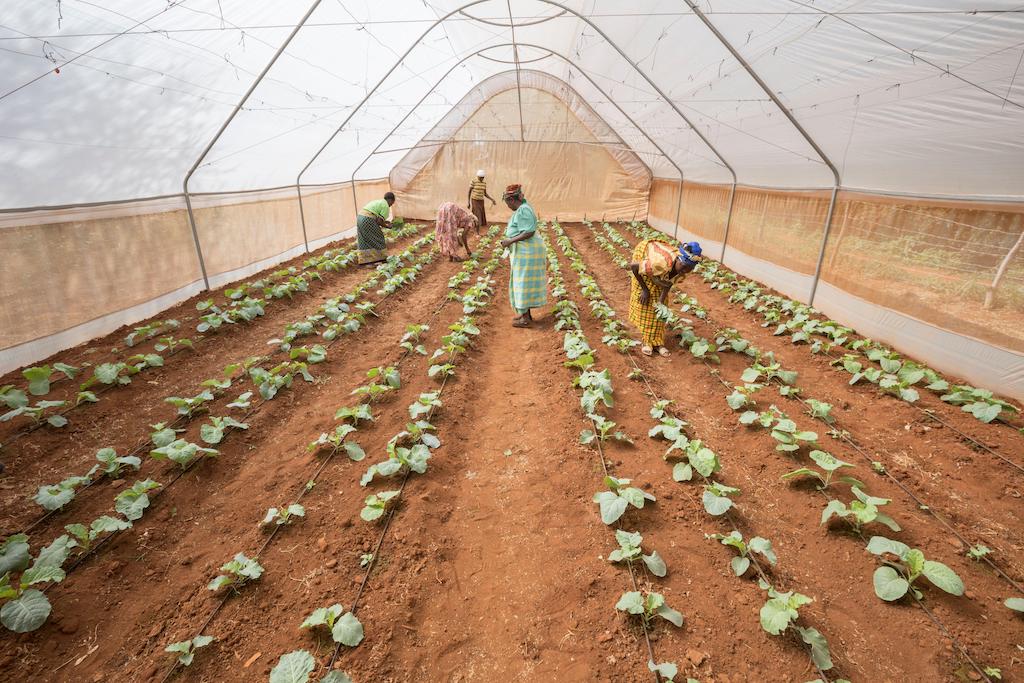
Greenhouse and hydroponic agriculture attract attention because controlled environments can support intensive production near urban markets. Investors should examine energy, water, crops, market access, technical management, equipment suppliers, and maintenance costs.
Livestock and aquaculture remain important opportunities where domestic demand exceeds available supply. Poultry, catfish, cattle, and related value chains can generate recurring markets, although feed costs, mortality, disease, biosecurity, and pricing remain critical variables.
Export-oriented commodities can provide another investment pathway. Crops and products such as hibiscus, sesame, cashews, and shea butter may benefit from regional demand, but investors must verify quality standards, logistics, certification, traceability, and buyer reliability.
The input market deserves separate attention because inadequate fertilizer and quality seed availability can limit farm productivity. Businesses that improve distribution, affordability, farmer access, or input quality may address a fundamental constraint within production systems.
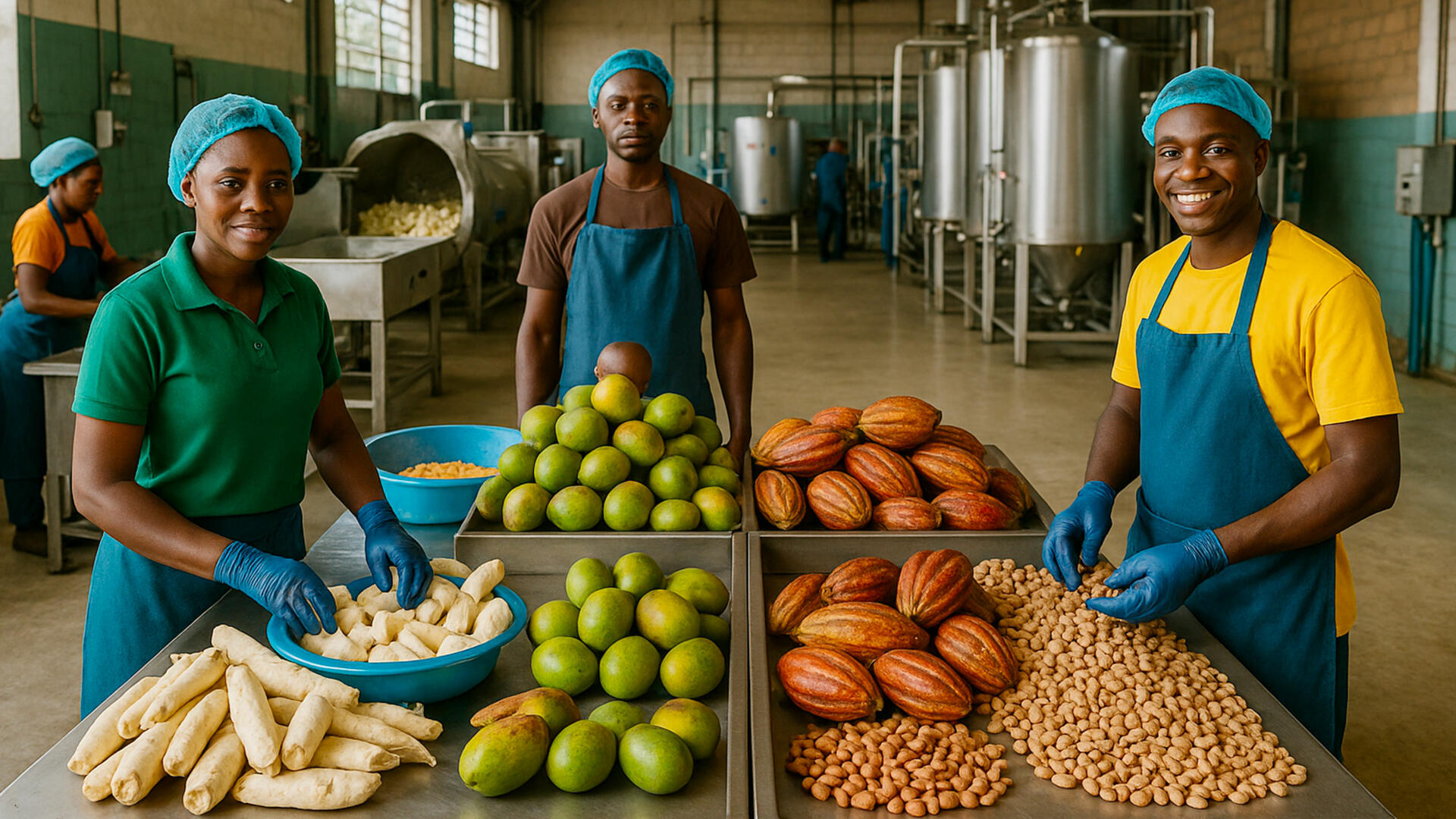
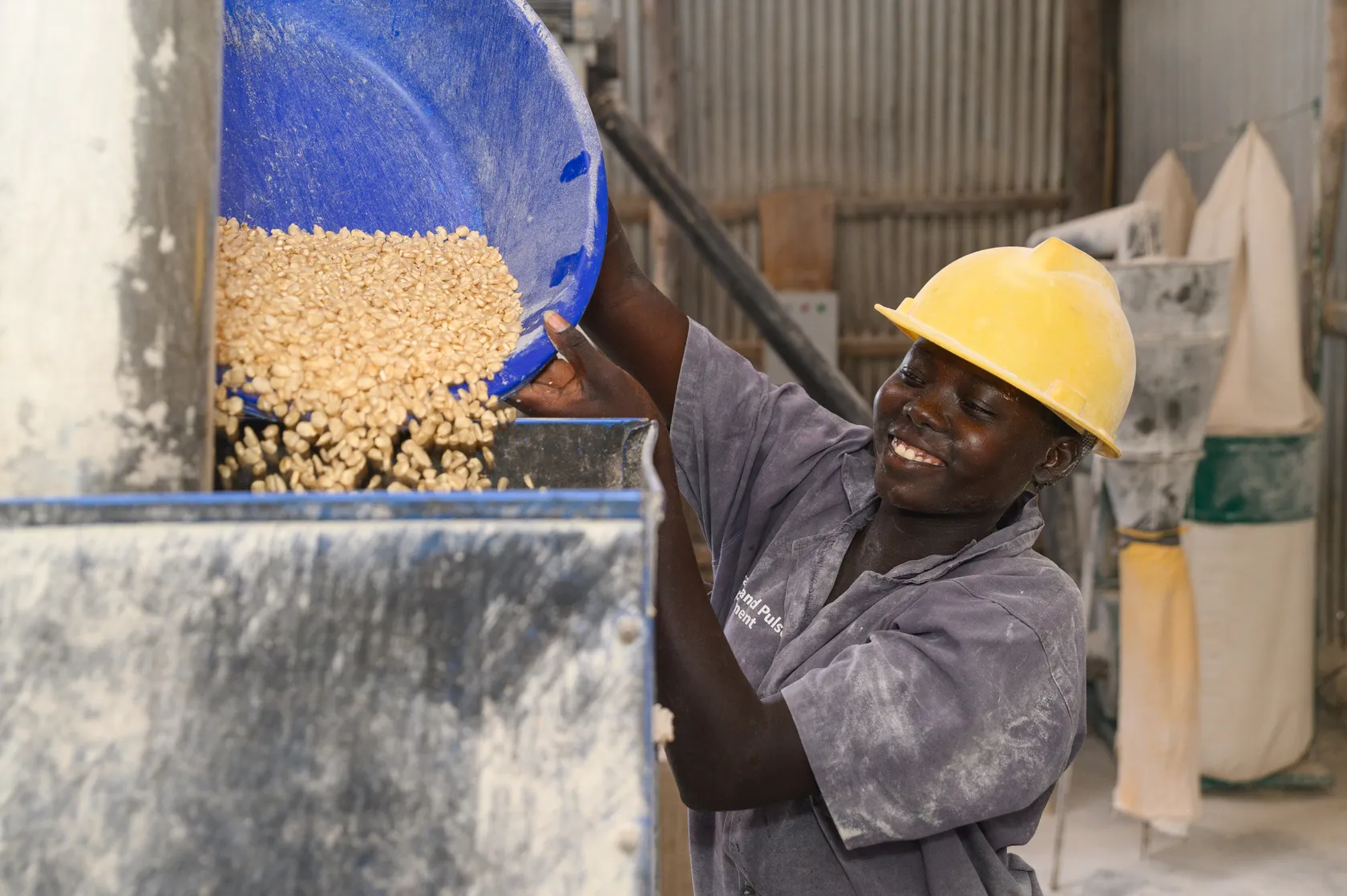
Processing can create value by converting raw commodities into products with longer shelf life, better marketability, or stronger margins. Processing requires dependable supply, suitable machinery, quality control, utilities, workers, and customers.
Agricultural logistics also deserves consideration because roads, storage, cold chains, aggregation centers, and distribution systems influence whether production can reach markets profitably. Businesses solving these bottlenecks may support multiple agricultural subsectors simultaneously.
Technology-enabled agriculture can attract investors through platforms supporting farm management, payments, advisory services, market information, traceability, logistics, and digital records. Investors should distinguish genuine commercial traction from technology demonstrations without sustainable customer economics.
Mechanization services can serve multiple farms without requiring every farmer to own expensive equipment. Service models may generate income through utilization, contracted operations, or shared access, although maintenance, fuel, financing, and operators require assessment.
The strongest subsector opportunities combine clear demand with defensible operating advantages. Investors should prioritize businesses demonstrating customers, supply relationships, measurable productivity improvements, disciplined management, and realistic pathways toward profitable growth.
Read Also: Complete Poultry Farming Guide for African Farmers
The Genuine Due Diligence Challenge
Due diligence in African agricultural markets can be demanding because information quality, transparency, documentation, and local access vary considerably between countries and subsectors. Investors should budget adequate time and resources for verification before funding.
Public information may not answer practical questions about land ownership, local competition, customer reliability, production performance, informal market pricing, infrastructure constraints, or regulatory implementation. Field-based investigation is often required to test management claims.
Local relationships can be particularly valuable because agricultural businesses depend heavily on communities, suppliers, processors, traders, transporters, regulators, and service providers. Understanding how these relationships actually function may reveal risks hidden within written proposals.
Technical due diligence should examine soil quality, water access, farm suitability, production systems, equipment condition, disease controls, yields, input requirements, post-harvest handling, and planned operational improvements rather than relying only on financial projections.
Commercial due diligence should verify customers and sales assumptions independently. Investors should examine contracts, purchase histories, pricing, payment behavior, competitors, demand trends, customer concentration, and buyers’ capacity to absorb additional production.
Financial due diligence should reconcile management accounts with bank records, tax documents, invoices, payroll, debt schedules, inventory, and capital expenditure. Differences between accounting reports and operating evidence require clear explanations before valuation acceptance.
Legal due diligence should cover company ownership, land rights, leases, licenses, permits, contracts, intellectual property, employment obligations, environmental requirements, disputes, taxation, and financing agreements. Local legal specialists should interpret issues that depend on national law.
Environmental and social review also matters because agricultural projects interact with water resources, soil, communities, labor, land users, and ecosystems. Risks involving community disputes, unsafe practices, or environmental damage can materially affect project continuity.
The purpose of due diligence is not to eliminate uncertainty. It is to identify uncertainty clearly, quantify where possible, negotiate protection where appropriate, and build investment structures that recognize the realities revealed by investigation.
A Structured Approach to Agricultural Investment
A disciplined investment process begins by identifying a credible project with a clear commercial problem, operational solution, target customer, and revenue pathway. Investors should resist funding ideas that cannot explain how value will be created.
Feasibility analysis follows project identification. Depending on the opportunity, this may cover farm suitability, production technology, water systems, processing capacity, market demand, logistics, labor, environmental considerations, capital costs, operating expenses, and financial projections.
Technical assumptions should connect to operational evidence. Expected yields, production cycles, mortality, conversion ratios, processing recovery, capacity utilization, and output rates should be supported by benchmarks or existing performance rather than optimistic targets.
Financial structuring should match the project’s stage and risk. Working capital, equipment financing, long-term investment capital, grants, concessional funding, debt, equity, and blended structures may each serve different needs within the same agribusiness.
Governance requirements should be established before funds are disbursed. Investors may require reporting standards, approval rights, board participation, milestone-based funding, audit requirements, procurement controls, or defined decision-making processes depending on transaction size and risk.
Implementation oversight becomes especially useful where project execution is complex. Procuring equipment, recruiting managers, constructing facilities, establishing farmer networks, and launching operations can require specialized coordination that passive financing alone may not provide.
Milestones should be measurable and linked to capital deployment. Examples include land readiness, equipment installation, farmer enrollment, production launch, customer contracts, processing volumes, collection rates, or revenue targets, depending on the project’s business model.
Monitoring should compare actual performance against the original investment case. Variances in yield, price, costs, working capital, staffing, customer demand, or implementation timing should be documented quickly so management and investors can respond.
A structured process creates decision discipline. It helps investors distinguish projects needing more information, projects needing better structuring, and projects whose underlying economics are not attractive enough to justify capital commitment.
Genuine Risks Investors Must Weigh Honestly

Climate risk can materially change agricultural investment outcomes because floods, droughts, heat, storms, and shifting rainfall patterns disrupt production, infrastructure, logistics, and farmer incomes. Risk assessment should therefore be specific to crops, locations, and seasons.
The source article highlights approximately 700,000 hectares of Nigerian farmland affected by floods in 2024. This example demonstrates why investors should treat physical climate exposure as a measurable portfolio consideration rather than distant speculation.
Disease risk can be equally severe. The article cites losses of roughly twelve billion naira linked to Nigeria’s ginger blight problem in 2023, showing how a crop-specific biological event can weaken production and investment assumptions.
Market price risk should be modeled through scenarios rather than a single forecast. Commodity prices can change because of harvest volumes, imports, currencies, consumer demand, policy changes, or disruptions within competing supply regions.
Currency risk matters for investments involving foreign investors, imported machinery, export revenue, or foreign-currency debt. Exchange-rate movements can alter equipment costs, repayment burdens, margins, and the local value of investment returns.
Operational risk includes management gaps, equipment failure, labor shortages, poor maintenance, weak controls, inefficient procurement, inadequate data, and unreliable supply relationships. Strong investment cases identify these risks early and assign clear responsibilities for controlling them.
Political and regulatory risk can influence land access, taxation, import rules, licenses, trade policies, subsidies, and agricultural programs. Investors should understand not only formal policy but also how rules are implemented within the target market.
Community and land-related risk requires careful treatment because agricultural projects can affect existing land users, local livelihoods, grazing routes, water access, and community expectations. Poor engagement can delay projects or create reputational and legal consequences.
Risk management should combine diversification, insurance where available, resilient infrastructure, strong contracts, technical controls, contingency reserves, market diversification, and realistic financial buffers. The objective is to absorb setbacks without destroying the entire investment case.
Government Alignment and Policy Tailwinds
Government policy can influence agricultural investment through infrastructure, incentives, trade rules, credit programs, land policies, mechanization initiatives, food security priorities, and support for processing. Investors should assess these factors as part of market analysis.
The source article emphasizes government interest in agricultural transformation and investment readiness, including Nigeria’s large areas of arable land. Land availability can be attractive, but productive investment still depends on access, rights, infrastructure, and management.
Policy alignment matters because public investment can strengthen roads, irrigation, energy, research, extension services, storage, or market systems. Private businesses may perform better when their operations fit broader infrastructure and development priorities.
Government support should never be treated as guaranteed revenue. Programs can change, budgets can tighten, administrative processes can delay implementation, and policy priorities can shift. Projects should remain commercially viable without depending entirely on incentives.
Investors should examine current agricultural strategies, investment regulations, tax treatment, import rules, environmental requirements, and relevant government agencies in the target country. Professional legal and investment advisers can help interpret these requirements accurately.
Public-private partnerships may create opportunities where infrastructure or service gaps are too large for individual companies to address alone. These arrangements require clear responsibilities, transparent procurement, performance obligations, and realistic assumptions about government capacity.
Trade policy can influence agricultural returns. Regional integration and the African Continental Free Trade Area may improve access to larger markets, but benefits depend on standards, logistics, border processes, and product competitiveness.
Technology, mechanization, processing, and food-system modernization increasingly overlap with government development priorities. Investors should therefore examine whether their proposed business strengthens productivity, value addition, employment, food security, or supply-chain resilience in ways governments prioritize.
Policy alignment is most valuable when it supports a fundamentally sound business. Investors should use government priorities as a potential tailwind while continuing to test demand, costs, execution capacity, governance, and downside scenarios independently.
Investment Structures for Different Investor Types
Investors can access African agriculture through several structures, including direct equity, debt, managed farm programs, partnerships, project companies, funds, and strategic investments in agribusinesses. The appropriate structure depends on involvement, risk tolerance, liquidity, and control.
Diaspora investors may prefer professionally managed programs because they can gain agricultural exposure without handling daily farm operations. Such arrangements can offer reporting, operational management, land support, and structured exit options, depending on the provider.
Institutional investors usually require stronger governance, reporting, risk controls, legal documentation, and portfolio management. Their investment committees may also demand evidence that the transaction fits broader allocation policies and expected risk-adjusted return thresholds.
Strategic corporate investors may prioritize supply security, processing capacity, distribution access, technology, or market expansion rather than financial returns alone. Their investment cases can therefore include commercial synergies that ordinary financial investors may value differently.
Private equity structures may involve direct ownership with defined governance rights and growth targets. Investors should understand shareholder agreements, dilution provisions, dividend policies, management incentives, reserved matters, exit rights, and share-transfer restrictions.
Debt structures can be appropriate when businesses generate predictable cash flows to support repayment. Investors should analyze debt service capacity, collateral, maturity, interest rates, currency exposure, repayment timing, and seasonal agricultural cash cycles.
Blended finance may combine concessional funding, grants, guarantees, commercial capital, or technical assistance. Such structures can reduce specific risks, but investors should understand eligibility rules, reporting obligations, conditions, and what happens when support ends.
Managed investment programs require careful due diligence because investors rely heavily on another party for operations. Financial statements, legal standing, ownership, performance history, fees, land documents, insurance, and exit mechanisms should be independently reviewed.
Whatever structure is chosen, the agreement should clearly define capital use, governance, reporting, performance expectations, investor protections, dispute procedures, distribution policies, and exit mechanisms. Good documentation protects relationships by making expectations explicit before problems arise.
Returns, Timelines, and Exit Planning

Agricultural investments have very different timelines, so investors should avoid applying one universal return expectation across every farming or agribusiness opportunity. Crop cycles, livestock turnover, processing capacity, and market development all influence capital recovery.
Perennial crops such as oil palm, coconut, and cocoa can require long development periods before mature production. Their investment cases therefore depend heavily on land quality, establishment costs, agronomy, management quality, and long-term markets.
Faster-cycle sectors such as poultry, aquaculture, and horticulture may generate operating results more quickly. However, shorter cycles do not automatically mean lower risk because input prices, mortality, disease, and selling prices can move rapidly.
Processing businesses may require substantial upfront equipment investment before achieving efficient capacity utilization. Investors should model commissioning delays, initial learning costs, maintenance requirements, working capital, raw material supply, customer acquisition, and ramp-up periods carefully.
Return projections should include base, downside, and upside cases. Investors need to know what happens when yields decline, prices fall, costs increase, implementation takes longer, or financing becomes more expensive than originally anticipated.
Cash-flow timing matters as much as accounting profit. Seasonal businesses may show attractive annual earnings while still requiring significant liquidity between planting, production, harvesting, processing, and customer payment. Working-capital planning should therefore be explicit.
Exit planning should begin at investment entry rather than when a problem forces a rushed decision. Possible routes include strategic sale, shareholder buyout, refinancing, asset disposal, continued dividends, reinvestment, or transfer of management control.
Performance reporting supports better exit decisions because investors can compare realized results with the original investment thesis. Reliable records make it easier to assess whether to scale, hold, restructure, sell, or reinvest in another opportunity.
A realistic exit strategy considers market liquidity, buyer appetite, legal transfer requirements, asset valuation, minority protections, and transaction costs. A profitable investment also needs a credible path toward realizing value.
Record Keeping and Portfolio Monitoring
Strong record keeping converts individual investment experiences into reusable knowledge. Investors should preserve due diligence findings, assumptions, forecasts, decisions, actual outcomes, risk events, management changes, and reasons for major portfolio adjustments.
Financial monitoring should track revenue, gross margins, operating costs, working capital, debt, cash balances, capital expenditure, and distributions. Reviewing these indicators consistently helps investors identify deterioration before financial problems become difficult to reverse.
Operational monitoring should reflect the business model. Crop businesses may track yields and harvest quality, livestock businesses mortality and feed performance, processors utilization and recovery rates, and digital agribusinesses customer retention and transaction volumes.
Risk records should compare what was expected with what actually happened. Tracking weather events, disease outbreaks, price changes, supply disruptions, regulatory changes, and community issues helps investors improve future assumptions and contingency planning.
Management reporting should distinguish between information, interpretation, and action. A strong report explains what changed, why it changed, how significant the change is, and what management or investors intend to do next.
Portfolio-level monitoring can reveal concentration risks that individual project reports may hide. Exposure to one country, crop, buyer, climate zone, currency, or policy regime can become excessive even when each individual investment appears acceptable.
Investors should periodically reassess whether the original investment thesis still holds. Changes in customer behavior, technology, competition, policy, production economics, or management quality may justify modifying the strategy before the planned investment horizon ends.
Documentation also strengthens accountability. When assumptions and decisions are recorded, investment teams can evaluate whether poor outcomes resulted from bad analysis, unexpected events, weak execution, or governance failures rather than relying on hindsight.
Over time, the accumulated record becomes a proprietary decision resource. It can improve screening, valuation, risk pricing, manager selection, monitoring, and capital allocation across future African agricultural investments where public information may remain incomplete.
Common Mistakes to Avoid

1. Underestimating due diligence difficulty: Investors can lose valuable capital by relying on remote research while overlooking local relationships, operating realities, documentation gaps, or regulatory conditions that require field-level investigation.
2. Treating integration as automatically superior: Vertical integration can create value, but adding activities also creates complexity, capital requirements, management demands, and risks that must be justified by measurable commercial benefits.
3. Pitching the wrong investor: Approaching a fund without checking its sector, stage, geography, ticket size, and mandate wastes time and can weaken credibility because the opportunity does not match the capital provider.
4. Ignoring physical agricultural risks: Weather, disease, flooding, drought, and price volatility can materially change performance. Investment models should use explicit scenarios, contingency planning, diversification, and appropriate risk-transfer mechanisms where available.
5. Overlooking input supply businesses: Investors may focus on farms or processing while missing opportunities created by shortages in fertilizer, quality seed, equipment services, advisory support, storage, logistics, and other production-enabling inputs.
6. Relying on optimistic projections: Management forecasts can become misleading when assumptions are not tested. Investors should compare projections against historical performance, independent benchmarks, customer evidence, operational capacity, and downside scenarios.
7. Ignoring governance and documentation: Attractive projects can become difficult investments when ownership, land rights, licenses, contracts, reporting, or shareholder protections are unclear. Legal and governance issues should be resolved before capital deployment.
8. Forgetting exit planning: A profitable business does not guarantee investor liquidity. Investment agreements should consider potential buyers, transfer rights, refinancing, distributions, valuation, transaction costs, and realistic routes for realizing value.
Summary on African Agricultural Investment Opportunities: A Practical Guide for Investors

| Market Direction | Vertically integrated agribusiness has attracted stronger recent investor attention. | Evaluate value capture across connected agricultural activities. |
| Investment Entry | Define country, subsector, value-chain role, return target, timeline, and risk appetite. | Build a disciplined investment thesis before screening projects. |
| Investor Landscape | Funds differ by geography, business stage, sector, ticket size, and mandate. | Approach only capital providers that match the opportunity. |
| Priority Subsectors | Greenhouse farming, livestock, aquaculture, exports, inputs, processing, logistics, mechanization, and agritech offer different opportunities. | Compare demand, margins, execution complexity, and capital needs. |
| Due Diligence | Technical, commercial, financial, legal, environmental, and social checks are essential. | Verify management claims with independent evidence. |
| Investment Structure | Equity, debt, blended finance, managed programs, and strategic partnerships can serve different needs. | Match financing structure to risk, cash flow, governance, and control. |
| Risk Management | Climate, disease, price, currency, operational, policy, and community risks can materially affect returns. | Use scenarios, diversification, controls, insurance, and contingency planning. |
| Monitoring and Exit | Financial and operational records improve portfolio decisions and exit readiness. | Compare actual results with the original investment thesis. |
Frequently Asked Questions About African Agricultural Investment Opportunities
1. What makes African agricultural investment attractive to investors seeking growth opportunities across farming, processing, inputs, logistics, technology, and integrated agribusiness value chains while managing significant market and operational risks?
African agriculture offers exposure to food demand, value-chain gaps, processing needs, input shortages, technology adoption, and expanding commercial activity. Attractive returns still depend on location, management quality, market access, costs, and risk control.
2. Why are vertically integrated agribusinesses receiving increased attention from investors compared with businesses operating in only one agricultural value-chain stage and depending on separate suppliers, processors, or buyers? in practice
Vertical integration can connect production, inputs, aggregation, processing, distribution, and customers within one coordinated business. This may improve supply reliability and value capture while supporting participating farmers, although added complexity still requires careful management.
3. Which African agricultural subsectors should investors consider when evaluating greenhouse farming, livestock, aquaculture, export crops, processing, inputs, logistics, and technology, and what makes each category commercially relevant? for investors
Priority categories discussed in this guide include greenhouse and hydroponic production, poultry, catfish, cattle, export-oriented crops, fertilizer and seed supply, agro-processing, mechanization services, logistics, and technology-enabled agricultural platforms serving identifiable market needs.
4. What should due diligence cover before investing in an African farm, processing company, agritech business, managed investment program, or other agricultural project with operational and regulatory complexity? before funding
Due diligence should examine ownership, land rights, management, finances, customers, suppliers, production systems, infrastructure, technical feasibility, legal obligations, environmental issues, market demand, insurance, debt, governance, and the assumptions supporting projected investment returns.
5. What are the most important risks that can affect agricultural investment returns across African markets, including production, market, currency, policy, environmental, governance, and operational risks that require active management?
Major risks include weather and climate shocks, crop and livestock disease, commodity price movements, currency changes, operational weaknesses, policy shifts, infrastructure constraints, community issues, customer concentration, weak governance, and insufficient working capital.
6. Can diaspora investors participate in African agriculture without personally managing farms, equipment, employees, production schedules, customers, and daily operations while still maintaining meaningful oversight over their invested capital? directly
Yes. Managed farm investment programs and other structured vehicles can provide agricultural exposure without requiring daily operational involvement. However, investors should independently verify financial performance, legal standing, ownership, fees, land rights, management, and exit mechanisms.
7. How should investors think about agricultural investment timelines when comparing perennial crops, poultry, aquaculture, horticulture, processing businesses, and technology-enabled agribusinesses with different capital requirements and cash-flow patterns? across sectors
Agricultural timelines vary substantially. Tree crops usually require longer development periods, while poultry, aquaculture, and some horticulture can cycle faster. Processing and technology businesses depend on commissioning, customer acquisition, capacity utilization, and working capital.
8. What records and performance indicators should an agricultural investor maintain to improve portfolio monitoring, risk management, valuation decisions, manager accountability, and future investment selection across multiple agricultural projects? consistently
Investors should maintain financial, production, operational, risk, governance, and market records. Comparing original assumptions with actual results helps identify recurring errors, improve future due diligence, strengthen portfolio oversight, and sharpen capital-allocation decisions.
Do you have any questions, suggestions, or contributions? If so, please feel free to use the comment box below to share your thoughts. We also encourage you to kindly share this information with others who might benefit from it. Since we can’t reach everyone at once, we truly appreciate your help in spreading the word. Thank you very much for your support and for sharing!
Read Also: What You Need to Know About Osteospermum


.png)
