

.jpeg)
.png)
Pigweeds are among the most difficult weeds to manage in row crop systems due to their rapid growth, high seed production and widespread herbicide resistance. During the past two decades, reliance on herbicides for weed management has led to the evolution of resistance in Palmer amaranth populations to several herbicides, particularly ALS -- acetolactate synthase -- glyphosate and PPO-inhibitors. That reality has intensified the need for integrated weed management strategies, including non-chemical practices such as cover crops.
Recent research from the University of Nebraska–Lincoln sheds light on how cover crop management decisions such as planting time, species selection and termination timing influence pigweed -- Palmer amaranth, waterhemp, redroot pigweed and smooth pigweed -- suppression. In a comprehensive meta-analysis of 41 field studies conducted across the United States and Canada from 1994 to 2024, researchers evaluated how various cover crop strategies affected the density and biomass of pigweed species, with an emphasis on Palmer amaranth, waterhemp, redroot pigweed and smooth pigweed.
Cover crops work, decisions matter
The meta-analysis, which included more than 100 site-years of data from across the United States and Canada, found that cover crops significantly reduce pigweed emergence and growth. However, their effectiveness depends on how and when they are managed.
Key findings were taken from the research.
- Cover crops reduced the pigweed density by 58 percent in the early season -- zero to four weeks after crop planting, by 48 percent in the midseason -- five to eight weeks after planting, and by 44 percent in the late season -- more than eight weeks after planting.
- Cover crops reduced pigweed biomass by 59 percent in the early, 55 percent in the midseason and 37 percent in the late season.
- Among cover crop types, grasses and mixtures reduced pigweed density by 60 percent and 77 percent in early season, 53 percent and 59 percent in midseason, and 44 percent and 47 percent in late season. Legume cover crops were effective only during the early season with a 47 percent reduction, while brassicas did not affect pigweed density.
- Cover crop residues remaining on the soil surface were more effective for pigweed suppression than incorporation.
- Cover crop biomass was a critical factor. Treatments producing greater biomass provided greater pigweed suppression.
Biomass matters
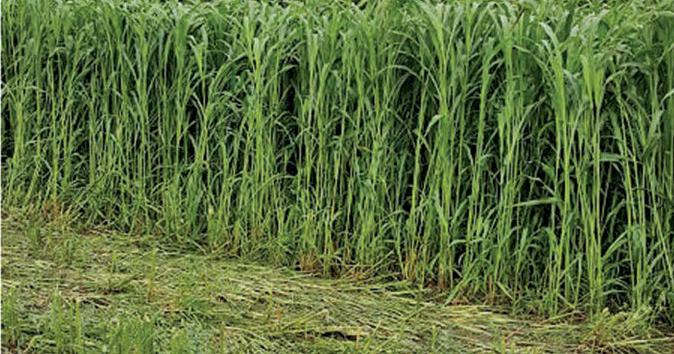
One of the strongest correlations observed in the meta-analysis was between cover crop biomass and pigweed suppression. Greater biomass creates a thicker mulch layer on the soil surface, which can reduce sunlight penetration, interfere with seedling emergence and delay pigweed growth. Moreover, some cover crop species -- especially cereal rye -- release allelopathic compounds that further inhibit small-seeded weeds like pigweed. The results suggests that growers should aim for more biomass to get better pigweed suppression.
As such, management practices that promote robust cover crop growth — such as early fall planting, delaying spring termination and choosing high-biomass species like cereal rye — are critical for maximizing weed suppression benefits.
Consider takeaways
In Nebraska, cover crops are already gaining traction for improving soil health, reducing erosion and enhancing nutrient cycling. The new research reinforces their role in herbicide-resistant weed management.
Fall-plant cereal rye for best results. Cereal rye, when planted by late September or early October, consistently produces enough biomass by spring to suppress pigweeds. It’s winter-hardy and can be easily terminated with standard herbicides.
Terminate late, if possible. Delaying cover crop termination until corn or soybean planting -- or slightly after -- allows for more biomass accumulation. The researchers meta-analysis showed the best suppression occurred when cover crops were terminated at or after planting -- a practice commonly referred to as "planting green."
Integrate herbicides smartly. While cover crops alone can reduce Palmer amaranth, combining them with herbicides provides the most consistent control. In high-biomass scenarios, growers may be able to reduce or skip the pre-emergence herbicide, which reduces expenses and selection pressure, but that should be evaluated on a field-by-field basis.
Monitor residue and soil coverage. Dense cover crop stands can sometimes interfere with herbicide placement. Ensure good seed-to-soil contact and adjust sprayer settings to account for residue interception, especially with soil-applied herbicides.
Match cover crops to rotation and equipment. While cereal rye is a top choice for soybean systems, other species like oats, barley or multi-species blends can also contribute to weed suppression. Termination timing, equipment compatibility and planting conditions should all guide choices.
Incorporating cover crops into weed management plans is not just about reducing weed density — it’s a long-term investment in slowing the evolution of herbicide resistance. Every weed that doesn’t emerge because of cover crop residue is one less exposed to herbicide selection pressure.
With pigweeds evolving resistance to multiple herbicide sites of action across Nebraska and surrounding states, the need for non-chemical suppression strategies has never been greater. The study provides strong evidence that cover crops can reduce weed pressure and herbicide dependence, especially when combined with strategic herbicide programs.
As climate variability increases and weed populations become more difficult to manage, resilient systems will rely on multiple layers of defense, and cover crops are a foundational tool in that strategy. Continued research at the University of Nebraska is focused on optimizing cover crop integration in real-world cropping systems, including ongoing trials on spring-seeded oats and barley, cereal rye termination timing, and the impacts of cover crops on soil health and water retention.
For growers considering cover crops for weed management, now is the time to act. Early planning, seed sourcing and seeding logistics can make the difference between a successful stand and one that provides little benefit.
The article was written in partnership by Vipin Kumar, graduate research assistant in the department of agronomy and horticulture; Mandeep Singh, post-doctoral research associate in the department of agronomy and horticulture; Resham Thapa, assistant research professor of Climate Smart Agronomy at Tennessee State University; Ankit Yadav, graduate research assistant in the department of agronomy and horticulture; Humberto Blanco, professor of soil science; Sam Wortman, assistant professor of agronomy; Saleh Taghvaeian, biological systems engineering associate professor; and Amit Jhala, professor and associate department head in the department of agronomy and horticulture.
Be the first to know
Get local news delivered to your inbox!



.png)
