

.jpeg)
.png)
I have to believe it’s a common wish among farmers and ranchers to somehow have more time each day during the summer months. Time is so elusive, and time is the great equalizer. No matter what our education level, the current balance in our checkbook, or the list of accomplishments we can rattle off via our verbal resumes, we all have 24 hours in each day. Of course, how Person A spends his or her 24 hours can be quite different than how Person B spends theirs, but I have to believe that having more time is a universal desire.
My family on my dad’s side is so fortunate that my grandmother Marion wrote a summary of her personal history. I re-read it from time to time, and in doing so, I hear her voice, I can taste her sugar cookies and iced tea and feel her aged yet soft hands giving me a reassuring hug and sharing emotions that words could not convey.
I marvel at how her generation spent their time. She wrote about being two years old and coming out to Montana with her brother and parents from Wisconsin. They arrived in Rudyard, Mont., by train. Other family had come to settle earlier and had much of the equipment and supplies already here. Yet, she wrote about how upon departing from the train, they hitched a team of horses, loaded up the wagon with a spring wagon behind and also pulled a car behind (I don’t know why they didn’t drive the car – a question I should have asked). It rained so much along the way they ended up unhitching the car and spring wagon to collect later, along with trunks and other supplies. They travelled over 22 miles from the train station to their homestead.
Grandma wrote that they had to haul water from the river in barrels and drive the stock to the river. Her older brother, Frank, walked five miles to school – he was just a small boy! A few years later, another school was built much closer to their farm, but she wrote that in the winter it was so cold inside the schoolhouse that her feet were always cold, and she would cry as they would itch. It is a gift to step back in time to learn what they did for games and activities. She wrote, “…but best of all was when Mom read to us, Frank sitting by her side and I on her lap. She read by dim light of the kerosene lamp until it was bedtime.”
In this memoir, she shared that for wedding presents, she and my grandpa Charles received a milk cow, a Hereford heifer, a sow pig, geese and chickens. She wrote, “1931 was such a bad, dry year that the sand blew so hard. About every two days, we would take out the curtains and shake the sand out of them.”
Yet, it was also important to her that she shared how they chose to make time to exhale and enjoy life. I get to metaphorically ride along to the country dances with her in the wagon under horse blankets and hot coals. I get to be at the box social where other bachelors ran up my grandpa’s bid to win my grandma’s picnic lunch she prepared. I get to go fishing with them and spend the night at the Missouri River Coal Banks landing, and enjoy fresh fish along with ham, potatoes, and sweet corn.
Grandma wrote with reminiscence, warmth, and pride. She didn’t write it from the “woe is me” lens. She acknowledged the difficulty and hard times, yet she made it clear it was all worth it. Though it is a treasure to have this journal of her life, I also have a sense of sadness and regret when I read it. I wish I had asked her more questions. I wish I had spent afternoons and evenings listening to more of her stories. Older cousins, other relatives, and my brother Randall all have their memories and stories of her that they can share, but it’s not the same. Many of those treasures are lost to the wind.
This harvest (if you allow me to give you some unsolicited advice) please take some time to just ask questions and listen to your older loved ones. Let us ignore the default doomscrolling or thinking we need to fill the air with the laundry list of tomorrow’s projects or caterwauling (I had to look up how to spell that one) of the day’s events. And let’s be mindful we are creating memories for the younger generation behind us.
Perhaps we start an “idea journal” in a notebook by the bed or on the back of an envelope in the shop. The ideas we put to paper today are the beginnings of our memoirs to fully flesh out in time – and put to paper – so that in 80 or 100 years the next generations can read these and marvel about how we chose to spend our time.
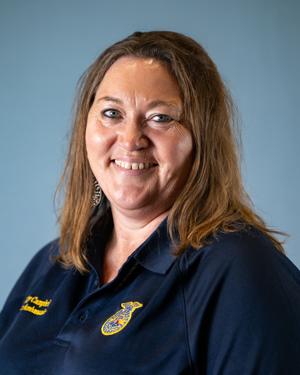
For more information on the Ask In Earnest initiative, go to www.askinearnest.org. Darla Tyler-McSherry, Founder and Visionary of Ask In Earnest, can be reached at askinearnest@hotmail.com.
Be the first to know
Get local news delivered to your inbox!
.png)
