

.jpeg)
.png)
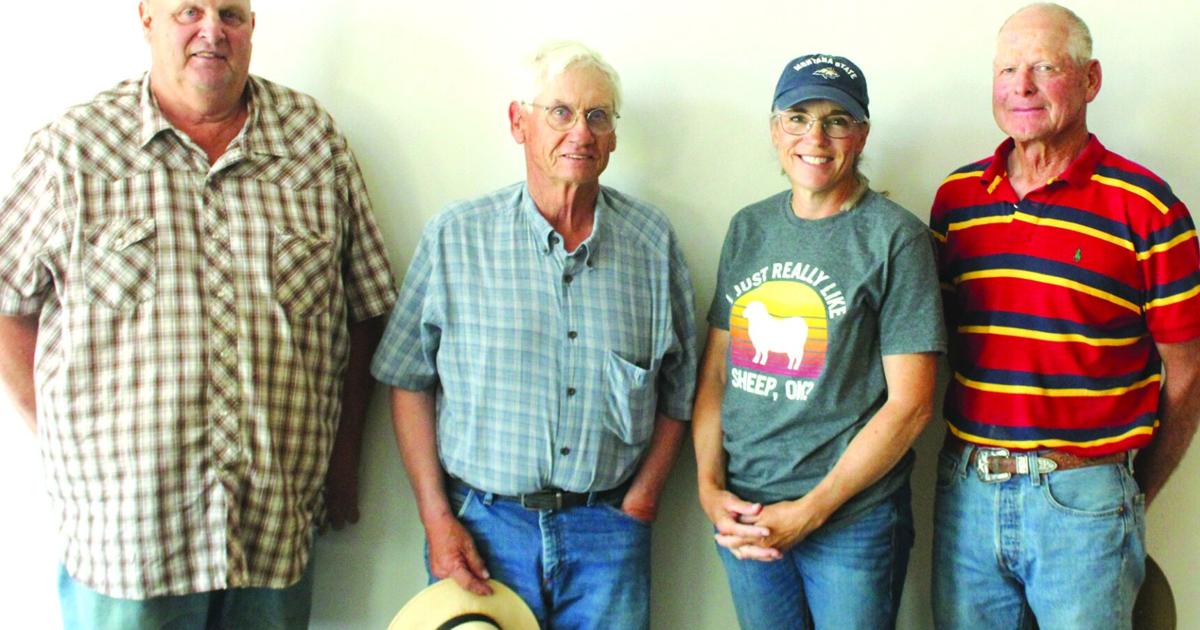
Well-known and respected ranchers Bart Carmichael of Faith, S.D., and Pat Guptill of Quinn, S.D., will be discussing grazing management strategies as part of a grazing school in Powers Lake, N.D., on Sept. 17-19.
The ranchers own a joint grassland management service, Principled Land Managers LLC, with its mission to advance producers in their grazing management to create healthy land, people, and livestock.
On their individual ranches, Carmichael and Guptill graze all year long, so they plan to teach many different topics on both grass management and cattle, including pasture math and allocations, animal health and nutrition, rangeland health and plant identification, ranch inventory, winter grazing, action plans and managing diversity.
Carmichael, a seedstock Angus producer, who has always enjoyed managing grass as a major part of ranching, said in a phone interview, “We want to give our grasses a long recovery after grazing intensively and we want diversity, so we graze the strips for six years and take the seventh year off.
“Basically, we have a 14-month recovery period on all our grass. When you do that, you get all sorts of species popping up in your rangelands and pastures that you may never have seen before. We have stopped counting, but the last time we did, we had 120 species of grass and shrubs in our pastures, and we are a forage-finished operation,” he added.
In fact, Carmichael said a group that was looking for 23 species of grasses on regenerative ag ranches in South Dakota found 22 of the species on his ranch, including winter fat. No one else’s ranch in the state had that many species on one site.
“Cows love winter fat. They will eat it all. We got that species after intensive grazing and allowing for a long recovery,” he said.
Carmichael said he and Guptill learn as much as they teach at the grazing school. They have gone from drought and producing little for grass to ranches that are bursting with native grasses, even in drought years because of how the grass is managed.
“This year, we have so many native flowers among our native grasses at our ranch – beautiful species of flowers,” he said.
Both say students they have at the school often return to another grazing school to learn more to have profitable, healthy ranches because they follow the principles of soil health.
“We may have different methods at our ranches, but the principles are the same,” he said.
Guptill added, “The biggest thing about year-round grazing is we no longer look at our cows as our primary management. We are managing grass. One of the huge things that you need to be careful with is that when grass is short and you graze it to the ground and not let anything rest and recover, it will take 35 years for the grass to come back. For rapid recovery, leave at least 1,000 pounds per acre of residue. After 3-4 months, if you get rain on it, it will be ready to graze.”
Carmichael said he met Guptill at a girls’ sports game, where their daughters were on opposite teams.
“We knew of each other already and when we met, I had questions for him and he had questions for me,” he said.
Over the years, the two have gone to numerous schools, classes, workshops and toured ranches everywhere, so they know what they are talking about.
Guptill said when he started ranching many years ago, his pasture was not in good shape.
“I knew we had to do something different, so we changed our method of grazing, and our pasture just boomed with plant structure, water infiltration, organic matter and more. Now, I look at every plant as if it is dying. I don’t want under or overgraze, so I need to manage every plant, so it is equally grazed.”
Guptill said the experience changed their mindset, and in doing that, they changed their whole outlook on managing their grazing lands.
Carmichael said when he first started ranching, he had three pastures with only a couple of species of grass and hay ground, and they’d just let the cows out.
“Then we cut the pasture into sections and later to half sections and later strips or cells (form rotational grazing),” he said.
Carmichael doesn’t call it “adaptive” or “regenerative” because there are so many names for what he does. To him, it all means the same thing.
“In 2012, it was so dry that we put the half sections into quarter sections of 40 acres for three days at a time. That was all temporary. It really worked, and the land responded. We got a tenth of an inch of rain and it responded,” he said.
“Then, we jumped in, and we fenced all the quarter sections into thirds with permanent high-tensile electric fencing. We subdivided that into strips, and we can do daily moves inside those strips if we need to. We move those cows for a short duration at high intensity. That was like a real light bulb moment for me. It just changed everything. So, we went into it, whole hog,” he continued.
“Every plant needs something different, and we are hitting it with different intensities to give each plant what it needs,” he added.
The cost for the grazing school is $300 per person for North Dakota Grazing Land Coalition (NDGLC) members and up to 40 people can attend.
NDGLC has been awarded a Ranch Resilience Grant from Beef Quality Assurance that will pay $430 for the cost of the school for one member of each family. Others who want to go but don’t qualify for the Ranch Resilience Grant can apply for NDGLC scholarships.
“I attended and a National Grazing Coalition and the Ranch Resilience Grant paid for that. All I had to do was take a photo of myself at the class and later do a half an hour online education form and I was reimbursed. It is a good award for us to have and be able to share with others who want to come to the grazing school,” said Trish Feiring, NDGLC field representative and rangeland management specialist.
The school offers three days of small group pasture education for any age.
“We had students last fall from ages 15 to 75. The 15-year-old took the class because she wanted to go into that field in college,” Feiring said. “ You will receive hands-on work with livestock while calculating both before and after actual grazing. This class is filling up quickly. We will house at hotels in Tioga.”
For the NDGLC scholarships and information on the Ranch Resilience Grant, please call Lesley at 701-355-4458 or Trish at 701-537-3136.
Be the first to know
Get local news delivered to your inbox!





.png)
