

.jpeg)
.png)
Crop condition ratings for the 2025 U.S. corn and soybean crops have been good all season, and the trade was expecting that would be reflected in the latest World Agricultural Supply and Demand Estimates (WASDE) report from the U.S. Department of Agriculture on Aug. 12.
In the report, yields numbers increased, but not quite as expected. USDA bumped up the soybean yield to 53.6 bushels per acre, just below the record. However, USDA lowered soybean production 43 million bushels from 4.335 billion bushels (BB) down to 4.292 BB due in large part to fewer planted acres.
“Soybeans have a record yield going at 53.6 bushels per acre, but in soybeans they took down the planted acres by 2.5 million acres, from 83.4 million acres down to 80.9 million,” said Ed Usset, professor emeritus and grain marketing economist with the University of Minnesota’s Center for Farm Financial Management.
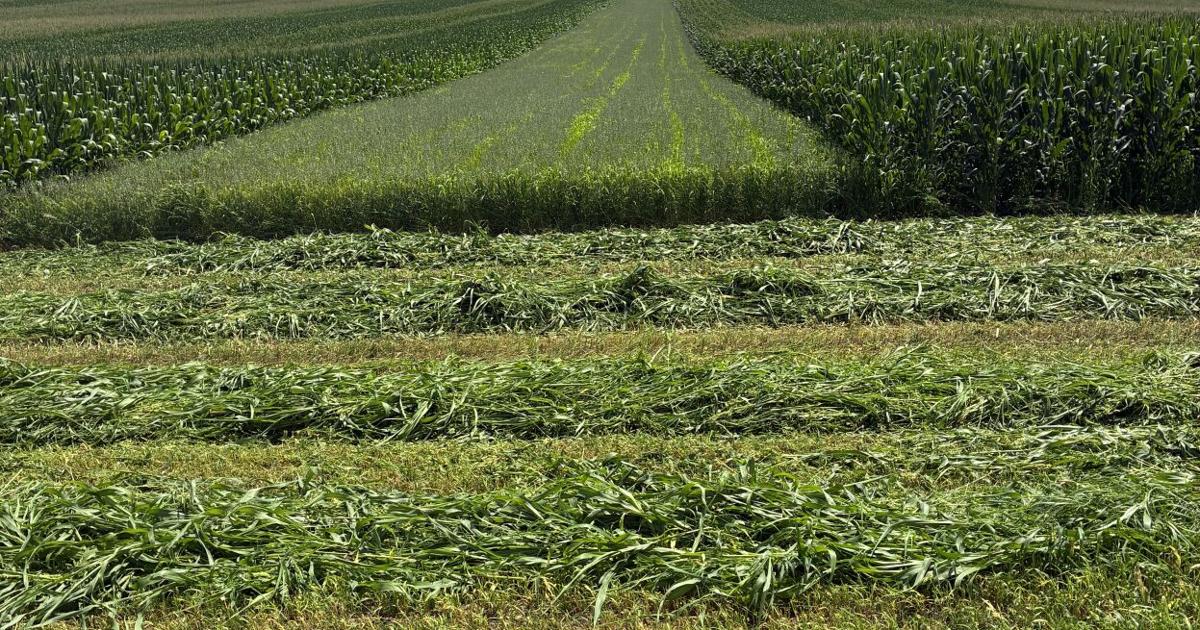
But the bigger surprise in the report came in corn where USDA forecast a record corn crop at a whopping 16.7 BB with record yields projected at 188.8 bushels per acre, which shattered another record.
“Unbelievable,” Usset called the report. “Two things, not only did they bump that corn number up to an area I didn’t see coming – 188.8 bushels per acre – they added 2.1 million in planted acres. In the July report, they had planted acres at 95.2 million acres, they raised it to 97.3 million acres. So, they raised planted acres by 2.1 million acres, and they raised yield projections by close to 8 bushels per acre.”
Prior to the report, Usset felt that yields for both soybeans and corn would likely increase, but it was the corn numbers that really took him by surprise saying he “would be shocked to see something north of 185 bushels per acre, but who knows,” just hours before the report came out.
The fact that total soybean production was reduced and corn increased so much had an immediate impact on the market.
“It’s the old one-two punch. That’s why soybeans are up 11.5 cents and corn is down 15 cents,” he said just one hour after the report came out. “I think my problem and the trade problem is we read these reports and farmers, they don’t call you up or they don’t talk about how good things are. They’ll talk about (problems) in the fields where they see some disease or there’s this problem or that problem, but there’s not a lot of talk about, ‘Holy (crap), is this a big crop,’ so they talk about the negative and we just don’t hear (the positive) stuff.”
Borrowing a book title from Charles Dickens, Usset said soybeans are like “A Tale of Two Cities,” or in this case, a tale of two markets. In one tale, exports are behind, while in the other tale, domestic crush is very good.
“Exports are just awful,” he said, which is due in large part because China has stayed out of the U.S. soybean market.
“New crop sales for the 2025-26 crop year are at a 20-year low for this time of year,” he said. “The next crop year begins on Sept. 1, just a couple weeks away, and what this is saying is that we’ve got very little on the books (in terms of new crop sales). We’re at our lowest level for new crop sales in the coming year. New crop sales are struggling because China has yet to buy a single cargo (of soybeans from the U.S.), and this is China’s latest start in the U.S. bean market since 2005.”
That said, the market had a good day recently after President Trump announced he was deferring his tariffs on China for another 90 days and urged China to quadruple its soybeans purchases.
“He’s trying to get China to buy soybeans (from the U.S.), but they’re doing their best to avoid us,” Usset said.
The “good tale” of soybeans is the crush. Usset said he uses December meal and oil futures and November soybean futures to calculate the cost of the soybeans relative to the value of the meal and oil.
“That crush is like $2.10 a bushel. It got up as high as $2.20 and that’s as high as I’ve ever seen it,” he explained, adding that he measures it once a year on Oct. 1 and he’s never measured it over $2 a bushel before.
“I’ve seen $1.90, $1.80, which are really good crush numbers. But we’re over $2 a bushel. And this is after two years of expanding crushing capacity (with the building of additional crush facilities in the U.S.),” he said. “You’d think with all that new crush capacity that the crushing margins would fall apart, but they’re doing great.”
“And, of course, the reason is soybean oil, which is over 50 cents a pound. In fact, we get the value of soybeans from the value of the meal and the oil, and the long-term average of meal is 60 percent of the value and oil is 40 percent of the value out of the soybean,” he explained. “Obviously, oil is worth more than meal, but you only get 11 pounds of oil and 40 pounds of meal. But right now, they’re almost 50/50. That means the oil is high enough to represent almost half the value in that $2.10 crush. So, the crush is really good, which is good news for the industry,” he added.
This is due in part to the opening of the 12th major expansion in two years of crushing facilities, the latest in David City, Neb. And there are more big plants that are going to be opening up in the next year.
“That’s the good news. The crush is gangbusters; the crush pace is really good. The bad news is the exports, which are way off,” he said.
Looking at local prices, at one local elevator in west central Minnesota regularly followed in this column, as of Aug. 12, the August cash price for soybeans was $9.37 and basis was -95 cents under. The December 2025 futures price for new crop soybeans was listed at $10.51 and basis was +21 cents over.
Be the first to know
Get local news delivered to your inbox!








.png)
