

.jpeg)
.png)
Recently retiring from full-time veterinary practice has allowed me to ponder some of the unusual things that I’ve been fortunate enough to see and do during the past 39 years. Most people don’t realize that veterinarians are trained as generalists and may enter practice ready to work on many species of animals. Most of us gravitate to some type of specialty but we still often are called to do some unusual things.
I’ve spent most of my career caring for dairy cows. But between calls for mastitis or milk fevers, I’ve had the opportunity to care for some not-so-common patients. Here’s a couple of “not everyday” things that I’ve been involved in.
We have a very diverse practice; we provide services to companion animals, horses and livestock. But we also provide care to a local zoo, deer and elk farms, petting zoos and animal rescues. Back before chronic wasting disease, we had several deer and elk farms as clients. One day a client called in because his mature bull elk had become tangled in a chain-link fence and was carrying around a large piece of fence on his antlers. He wanted me to come and dart the bull so that we could remove the fence.
When I arrived, I could see a 1,000-pound bull elk standing in the middle of a muddy wooded lot, kneeling on his front knees with a large “ball” of chain-link fence wrapped around his massive antlers. The mass of fence was so heavy that he couldn’t lift his head.
Once my equipment was ready to remotely deliver a tranquilizer dart, I started to approach him to have a clear shot. As soon as he saw me approaching, he struggled to climb onto his front legs. He lifted his head with the massive glob of fence and started to run away, crashing into trees along the way. He ran a short distance, became fatigued and then stopped to rest with the “fence ball” on the ground. Every time I came close enough to have a clear shot, he would repeat – rise, lift up the very heavy mass of fence, run and crash into trees. Finally he became fatigued enough that I was able to have a clear shot.
After 10 to 15 minutes, he lay down and fell asleep. Once safe, I trudged through the mud to him. Using a pair of bolt cutters, I removed the chain-link fence from his antlers. After administering a reversal agent, he arose and bounded off no worse for the wear – although probably with a sore neck!
Because we’re close to Baraboo, Wisconsin, and the Circus World Museum, I’ve had the opportunity to care for some of the performing and exhibition animals. Those have included Asian elephants, tigers, ponies, camels and more. One day we received a call from a gentleman who owned a performing elephant. He and his wife were travelling with his elephant, named Kelly, to Chicago for a circus. They had stopped for the night at a friend’s farm outside a neighboring town. During the night, Kelly cut her trunk on a sharp piece of wood from a tree stump. He wanted her stitched up and brought her to our clinic in the back of a semi-tractor trailer.
Kelly was very gentle and well-trained. She allowed me to examine her to find a 3- to 4-inch-deep laceration near the end of her trunk. In order to suture the laceration, I needed to numb the area with injectable anesthesia. So while the owner held onto her trunk and his wife threw handfuls of grain into her mouth to distract her, I carefully injected the numbing solution. I could tell she didn’t like what was going on. But as long as he held onto her trunk and kept yelling “Kelly, still! Kelly, still!” and his wife kept throwing handfuls of grain into her mouth, we were good to go. We stitched her wound as best we could and they were on their way.
My last story is about a client who kept a string of ponies for rides at fairs and circuses, but also owned a pair of Patagonian Maras. He kept the rodents, native to Argentina, for exhibiting at fairs and circuses. They badly needed nail trims. I must admit I had never heard of the animals and needed to refer to the internet. They were not easily handled so we sedated them to enable us to do our work. Once sedated, we trimmed their nails as well as a strange callous-like structure on their back legs. Easy-peasy!
We did dental work on a beaver, wolf castrations, a vasectomy on a white tail deer, field surgery on tigers, nail trims on old tigers and lions, castration of a zebra, laceration repair on a kangaroo, tail surgery on a river otter – and more I can’t even remember. That’s the great thing about this profession. No two days are alike and if you’re open to it, you might just find yourself chasing down a bull elk with a tranquilizer gun!
Visit www.lodivet.com for more information.

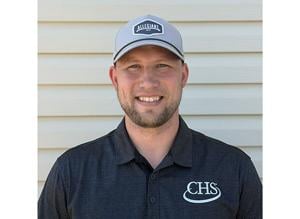
Mike Etter

Dr. Mike Etter, veterinarian, has worked at Lodi Veterinary Care for 36 years. He and his wife, Cathy, have three grown children, two grandsons, a dog and a cat.
The Lodi Veterinary Clinic is located in the city of Lodi, Wisconsin. It’s fully equipped with a cattle-handling facility, stalls for hospitalizing patients and a pharmacy, with livestock, equine and small-animal departments. Visit www.lodivet.com for more information.
Be the first to know
Get local news delivered to your inbox!



.png)
